


Zefyr Lisowski’s Uncanny Valley Girls intertwines memory, survival, and horror films
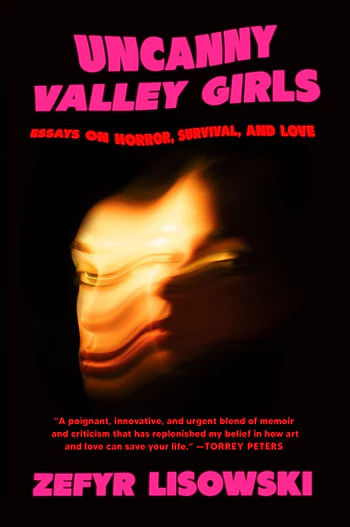
Why do so many people love horror films? The simple answer is that we love to be scared, but according to author Zefyr Lisowski, horror films force viewers to surrender themselves to the experience. In her book, Uncanny Valley Girls: Essays on Horror, Survival and Love, Lisowski contends that “Despite the ghosts or curses or spree killings, scary movies are ultimately about the weight of violence on a life.” For Lisowski, watching horror movies is not a form of escapism. Instead, they showed her how to navigate survival in the face of “unbearable pain.” Although not all of the essays in her book contain references to horror genres, most make connections between horror films and the real-life situations of Lisowski as a trans woman in today’s America.
Most of the chapters in this collection follow a pattern. Lisowski opens a chapter with a specific experience in her life and then moves on to a discussion about a horror film and how that film reflects what is happening in her world. Horror films included in this book are Black Swan, The Ring, Dark Water, Scream, and Saint Maud.
For me, however, the most interesting essay focuses on The Texas Chain Saw Massacre where she focuses on the gritty but beautiful images found in the film. To be sure, the word beautiful is not usually one that is associated with this particular film, but Lisowski’s examples show us that beauty can be found in even the most brutal moments. She also notes that the film has interesting things to say about disability. Giving credit to her partner Avery for these observations, Lisowski notes that both groups in this film, “the killers and the killed,” have characters with disabilities: Franklin, Sally’s brother, uses a wheelchair and Leatherface, who appears to have a developmental disability. Both characters are abused by members of their groups. In fact, according to Lisowski, Franklin seems to get the most hate out of all of the characters even though “the only thing he has done wrong is exist in a world that refuses to make space for him.”
Readers picking up this book will not get a linear memoir of events about the author’s life. Instead, they will be treated with thoughtful critiques of how horror films reflect our very lives, whether we want to believe in ghosts or zombies or whether we want to confront menaces that are much more real.


Comments