


Book Review: Author Ryan Izay explores Home Invasion Horrors
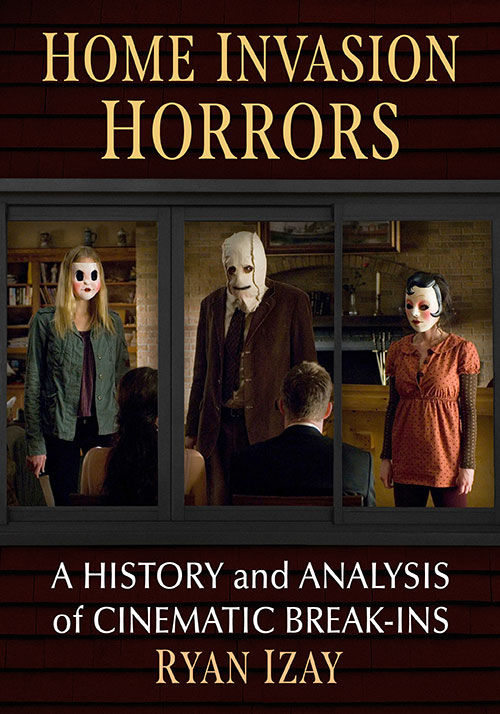
Home invasion horror movies have been around since the beginning of cinematic history, but the 21st century has seen an explosion of titles in this subgenre. In his book Home Invasion Horrors: A History and Analysis of Cinematic Break-Ins (McFarland, 2025), author Ryan Izay seeks to not just analyze individual home invasion movies, but to also offer suggestions about why we are seeing an influx of these types of films. The end result is a sometimes dizzying, yet interesting and rewarding look at this subgenre of home invasion films.
Izay starts his book by exploring the elements of this horror film subgenre. In this introductory chapter, Izay looks at setting, characters, plots and themes – all elements that should be recognizable to any student in a high school English class. Still, Izay goes to great lengths to explain how varied and sometimes complicated these elements can be. For instance, when he looks at characters, he divides this group into victims and invaders. Then, he further divides these groups so that characters are not just flat personalities but complex individuals. In a similar way, Izay spends time looking at all of the elements, often citing examples found in home invasion films, some he will revisit later in the book.
In the next chapter, Izay takes a look at the history of home invaders in films, starting with examples in the silent movie era. He cites the film Terrible Anguish, based on the play “Au Telephone,” as the first in the subgenre of home invasion flicks, noting that at this time, these types of films often take on a “race to the rescue” tone where victims may or may not survive. He also notes that gangster films that involved home invasion plots were popular for some time and that later, the rise of juvenile delinquent figures in many movies became more prevalent. The 20th century introduced many of the tropes that would be seen again and again (although in different ways) in later home invasion films. For example, Wait Until Dark, released in 1967, introduces the familiar figure of the blind victim left alone in the home. And just a few years later, The Last House on the Left blurs the line between victims and intruders.
For me, this book starts to get really interesting when Izay begins to examine the home invasion films of the 21st century. He calls this the home invasion explosion and cites this interesting statistic (complete with bar graph): “there were only 91 releases in the first 100 years of cinema, while no less than 250 have been released in the first two decades of the twenty-first century.” Izay also notes that there is no sign of this trend slowing. So yes, if you are fan of this subgenre, there are no worries, as there are more to come!
Why the sudden increase of this subgenre of horror? In general, horror movies often reflect the concerns and anxieties of the world, and Izay takes this into consideration when examining this sudden influx of home invasion movies. First, Izay notes that there was an overall concern about real home burglaries and kidnappings – a concern that was real in the public eye but not reflected in statistics and data of this time period. Second, Izay points out that the 9/11 attacks made Americans realize that the world they thought was safe was suddenly not. Then he explains the influence of the Great Recession and the housing bubble burst. Finally, he also notes that general immigration anxiety and influences of Fourth Wave Feminism can be seen in individual movies.
Izay then dives into explorations of specific films. He carefully categorizes these films, examining the different motives of intruders and the various kinds of victims. For example, Izay explains that a new addition to this kind of movie is “intruders looking to retrieve something that they believe is rightfully theirs” found in Panic Room, a 2002 film. Another film, The Strangers, focuses on a young couple terrorized and tortured by a trio of invaders. This particular film is truly chilling because it illustrates a random act of violence and for viewers who want to know why the action is happening, they will not receive any answers. Yet another film, The Purge takes the audience into a future world where the crime rate is very low, yet once a year, during a 12-hour purge, all crime (including murder) is legal. The main character, who is a top security salesman, and his family become victims of a gang who invades the home. Izay notes that this film clearly makes commentaries on class issues as the invaders are wearing masks that reflect smiling and polite faces of what is considered upper class society in America.
In many of these films, the invaders are clearly the villains, but Izay does include a brief chapter that focuses on films where the invaders are at least sympathetic figures if not heroes in their own right. For instance, in the film. Don’t Breathe, one of the thieves is sympathetic because she is trying to save up money from burglaries to rescue her sister from an abusive mother. The homeowner is blind and thus, elicits some sympathy until the audience finds out what is really going on in this house!
These, of course, are just a few of the examples that Izay explore and there are many other films mentioned that may not be as recognizable. Indeed, even though the book has a whirlwind of movie titles and exploration of the home invasion tropes, it is helpful to note that the book contains a filmography at the end.
Izay concludes his book with a look at variations or “hybrids” as he calls them. In this chapter, the author examines the intersections of the supernatural and/or nonhuman monsters with the general characters, settings, and plot of home invasion films. Many of these movies include anything from an invading crocodile (The movie Crawl) to supernatural elements (The Conjuring films). In spite of the nature of the invader, similar themes as general home invasion films are in place. Izay’s final paragraphs offer a reflection of what is to come in the subgenre of home invasion films, including plots that address COVID-related or Artificial Intelligence fears.
Home Invasion Horrors: A History and Analysis of Cinematic Break-Ins is not a light read. The chapters are dense and packed with many references to many films. Often, Ryan Izay leaps from one film to another in a fast pace that doesn’t allow the reader much time to contemplate about what is being said. Still, Izay’s use of data and other secondary research regarding the analysis of horror films is commendable. While home invasion films may decline, Izay concludes, that “they will always return in some form.” In essence, the home invasion film will always be here – it just may look a little different.
Home Invasion Horrors: A History and Analysis of Cinematic Break-Ins by Ryan Izay was published by McFarland. The website is https://mcfarlandbooks.com/.


Comments