


Nightborn is a wildly creative and provocative take on motherhood (Fantasia 2026 review)

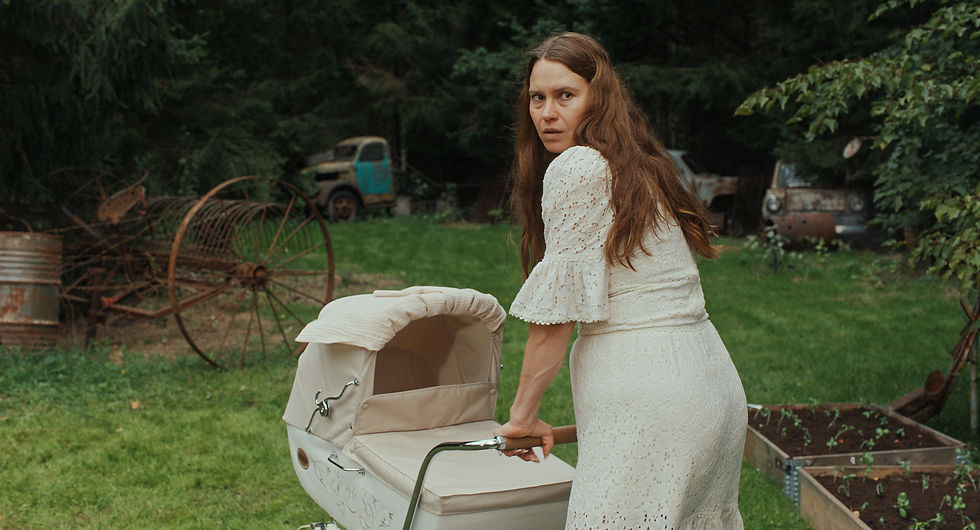
Hanna Bergholm's first film, Hatching, was a creature feature that explored the relationship between an overbearing mother and a daughter. The theme of motherhood was pushed further via the movie's bird-like monster that eventually transformed into a young woman. The director's second film, Nightborn, is a bold and unflattering take on motherhood, and this time, her movie uses elements of folk horror to craft another memorable creature feature with important themes.
The film stars Finnish actress Seidi Haarla as Saga. It can't be stated enough just how good Haarla is in this role, and thus far, it's one of my favorite performances in a horror film this year. Initially, Saga is excited about the baby, to the point she transforms her delipidated childhood house in what seems like a matter of days to welcome the baby and make him feel at home. However, when the child is born, something is off. It cries, and cries, and cries, and it lashes out violently. It's also born with excessive body hair. Prior to the birth, Saga and her husband, Jon (Rupert Grint), mated in the Finnish woods surrounding the home. The use of natural imagery and folk horror elements is well done. It's clear from the outset and because of the way the child was conceived, that there's a pull of nature and something supernatural at play with deep roots, literally and figuratively, as if the child is the product of those woods and whatever lurks in it.
From there, the film addresses motherhood and the challenges of it, including the changes Saga's body undergoes. She says more than once that she no longer feels attractive, and this is accompanied by a few shots of her looking appalled at her body in the mirror. Meanwhile, nearly everyone blames her for the baby's troubles, including her friends and neighbors. Her mother (Pirkko Saisio), meanwhile, thinks that motherhood isn't all it's cracked up to be and that Saga should return to work instead of devoting her life to a child. Even her sister, Taru (Pamela Tola), eventually labels her a monster.
As the film goes on, Saga becomes more and more feral, like her child, to the point she growls and quits caring about her appearance. Because of the unabashed and unflattering way that motherhood is treated in this film, it'll likely draw a few comparisons to The Babadook. And as already stated, Haarla gives one hell of a performance, on par with Essie Davis' role in the 2014 film.
Grint is good, too, especially watching his character transform from a semi annoying, yet caring husband, to yet another loved one who faults Saga and blames her for their baby's struggles. I wouldn't quite say he transforms into a full-blown villain, but by the film's last act, it's tough to really like him and it's entertaining to watch Grint play someone who's not exactly a loveable character. However, his transformation comes with time and solid pacing. Like Saga, he has a well-written character arc.
The other star of this movie is the baby. Initially, Saga refuses to even call it him, and instead calls the baby it. The blood-sucking young one growls, attacks, and nearly destroys Saga's mental state. It's a real menace and unpredictable threat that adds a fun horror element to the film.
With Nightborn, Bergholm released a solid second feature with a gripping performance by Haarla at its core. The film offers a raw and uncomplimentary view of motherhood and a baby that's literally a monster. This is accompanied by some stunning shots of natural imagery throughout the film, which also enhance the well-written folk horror elements.
Nightborn recently screened at the Fantasia Film Festival, and it will stream on Shudder beginning July 31.


Comments