


Book review: Just like ghosts, Something Followed Us Home will stay with you long after you lay it down

What differentiates a ghost in Latin America from one in the United States, or another that
appears in Europe?
As summer comes to a close, and we finish reading the terrifying stories in last month’s release of Never Whistle at Night Part II: Back for Blood, we can kick off spooky season with another round of tales best told in the dark.
The best—and most profound—ghost stories carry the most human qualities. The aspects of life that can already haunt us reflect well in the afterlife. Colonization, faith, historical/generational trauma, displacement, and even love carry their own haunting potential. But when ghosts and demons weave their own supernatural influence into the scary stories that we already experience, the emotions and reactions triggered aren’t unfamiliar.
This is the foundation upon which Something Followed Us Home stands.
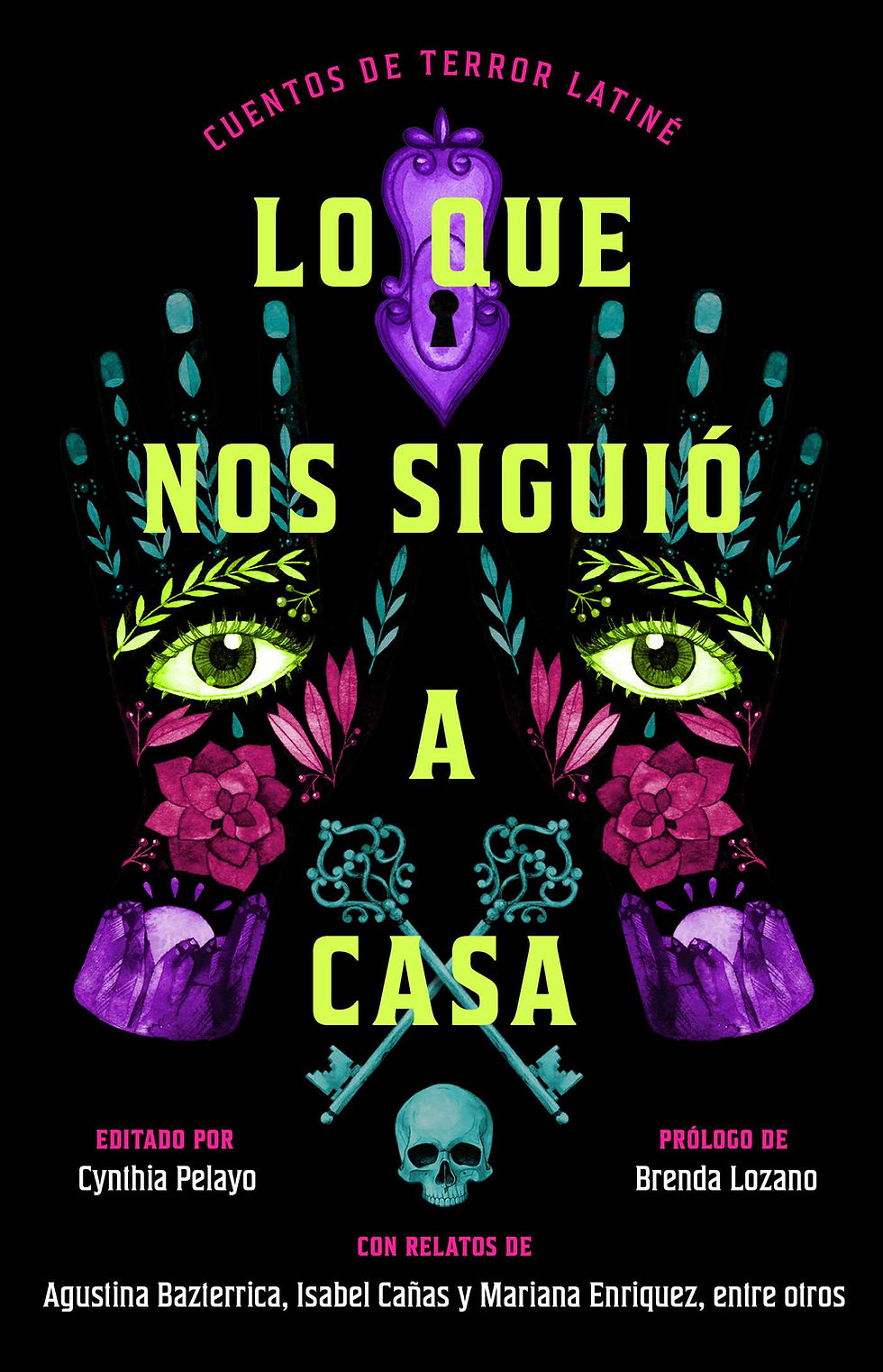
Something Followed Us Home: Tales of Latiné Horror is a collection of short horror stories edited by Bram Stoker Award-winning author Cynthia Pelayo. 17 stories make up the collection, all written by Latiné authors; Alex Segura, Xochitl GonZalez, Isabel Cañas, Mariana Enriques, etc.
Such a lineup of voices is a recipe for a unique cultural amalgam. While Latin America carries a wide dispersion of cultures, the book explores aspects that are universal across many cultures; colonization, identity, gender politics, etc. But this also makes it a recipe for some furious frights.
In the book’s forward, Brenda Lozano infers that Latin American ghosts are inherently linked to dictatorships, femicide, and repression. She goes on to state that all ghosts have something in common regardless of national origin; they are “the past barging in on the present.”
I believe the story that most exemplified this was “The Return of La Muelona” by Carolina Flórez-Cerchiaro.
Utilizing the Colombian folkloric entity La Muelona (“Big molar woman”), Flórez-Cerchiaro’s story centers on the town of Santa Elenita and follows the mayor’s daughter, who is being forced to marry the wealthy owner of a banana plantation. She turns to La Muelona (aka “Isabel”) for help.
Flórez-Cerchiaro explores several topics in this story, explicating historical trauma through the town itself, and the hard labor that built it over years. The greed of man flourishes quite literally through the banana plantations, which are maintained, along with the owners’ splendors, through generations of back-breaking labor.
The predicament of the mayor’s daughter is an unfortunate, but not uncommon, terror on its own. She yearns for own independence and freedom of choice. To not be promised as property to a greedy man she doesn’t love. To not bear the children she was always expected to. Through La Muelona’s emergence, Flórez-Cerchiaro doesn’t add more scares to the story but instead channels the horrors we’ve already been introduced to. She demands blood in the same way the economy of the town has demanded it for centuries. The ground under Santa Elenita is soiled with pain, tears, and blood.
You saw it, didn’t you? The truth woven into the Earth?
The language in the story is downright beautiful. Flórez-Cerchiaro effortlessly weaves the haunting descriptions of the town’s history and culture into the present and bridges the metaphors with the reality seamlessly.

Despite the haunting metaphors and descriptions throughout the collection, there is a level of mostly ironic humor that makes consistent appearances. As with the book’s satisfying supply of gore, the humor is not gratuitous, serving to drive the authors’ ideas home. My favorite example of this is “Her First Cruise Ship” by Ann Dávila Cardinal.
The story follows Ileana, a recent college grad working in an artisan market in Puerto Rico on the day a cruise ship full of tourists makes a scheduled stop to visit Old San Juan. Ileana is already dreading the routine invasion before she sees the departing passengers making their way to the market are all rotted zombie-like caricatures of tourists. But their motivation is rooted in pulling out credit cards rather than limbs (don’t worry, they do that too). One of the first passengers Ileana rings up asks in a low, strained grunt if she'll honor a 20% discount for cruise passengers.
Having grown up in a town whose economy depends on tourism, I found myself unexpectedly relating to some aspects of the story, though we generally compared tourists to vampires rather than zombies. The brilliant absurdity of the concept drives the humor, especially since it is told from Ilean’s perspective, who is the only character who seems to find the situation bizarre. Her co-workers simply brush it off as another cruise day, even after cleaning up the mess left over from a cosmetics worker being torn to pieces after offering to discount eye cream with another purchase. They even treat the whole ordeal as something of a rite of passage for Ileana as an employee.
Aside from white tourism and consumerism, Cardinal touches on issues of identity through Ileana. Ileana herself is Puerto Rican but has light skin and is not fluent in Spanish. These attributes make her feel alienated from her co-workers at the market who mostly speak Spanish.
Like the talented authors of Something Followed Us Home have demonstrated, it is impossible to hear these stories of the supernatural without hearing the devastating echoes of the past and the harsh cries of the present. Just like it is impossible to summarize the frights and themes packed into the collection, especially through two stories. Stories that don’t explore disgusting realities of family abuse. Or the complications of being torn between your lover and his possessive demon (and carrying out a monthly chicken sacrifice). Or the awkwardness of your mother-in-law being a witch.
To get a better idea of those aspects, and the ones I’ve briefly talked about, you’ll have to pick the book up and dive into these tales yourself.
Something Followed Us Home is currently available in both English and Spanish from Atria Books.



Comments